
Three research teams recognized for outstanding work translating health evidence into real-world impact in underserved communities
LONDON, July 14, 2026 /PRNewswire/ — The Elsevier Foundation and The Lancet announced today the three winning teams of the inaugural edition of The Lancet–Elsevier Foundation Evidence to Impact Awards. The Awards recognize research teams that go beyond publishing experimental findings: teams that have put implementation science to work, with communities, to change how health care is actually delivered.
Today’s health landscape faces complex challenges: from rising non-communicable diseases and infectious diseases to malnutrition and healthcare access gaps. One-size fits all approaches to rolling out health interventions often fall short of delivering scalable, long-lasting solutions when they have been shown to work in a single setting. The Evidence to Impact Awards aim to highlight the importance of implementation science, an approach focused on translating research into practical, context-specific strategies that have the potential to drive systemic change across diverse settings.
The scientific jury selected the winning teams based on four criteria: demonstrated community need, meaningful co-design, clear implementation strategies and outcomes, and long-term sustainability. Each team receives a $10,000 recognition award to support their work.
The 2026 winners
Implementing Essential Emergency and Critical Care in Tanzania
Tim Baker, Anab Issa, Godfrey Barabona, Hilda Mushi, Pius Kagoma, Upendo Bandeke, Karima Khalid
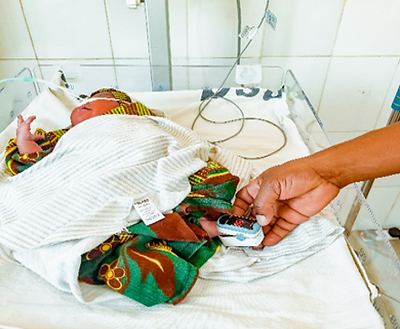
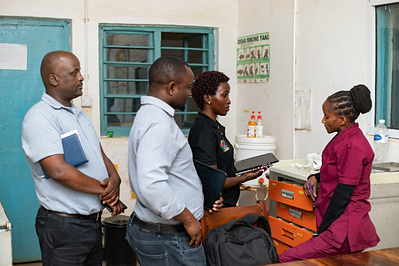
According to the African Critical Illness Outcomes Study published in The Lancet, 1 in 8 patients in African hospitals are critically ill, and more than half of those patients do not receive full essential emergency and critical care treatment, including oxygen, fluids, and vital-signs monitoring. The Essential Emergency and Critical Care in Tanzania (EECCiT) project, led by Associate Professor Tim Baker at Muhimbili University of Health and Allied Sciences (MUHAS) and developed with Tanzania’s Ministry of Health, UNICEF, and Karolinska Institutet, is changing that through a structured national implementation program. Since June 2025, over 1,000 healthcare providers have been trained across 79 facilities in six regions, and EECC coverage has risen from 27% to 75%. Early results point to a 31% reduction in inpatient mortality across implementing facilities. The program is built for sustainability from the start: monitoring indicators are embedded in Tanzania’s national health information system, and patient researchers, including survivors of critical illness, sit on the team as co-applicants.
“We are honored to receive the Elsevier Foundation-Lancet Evidence to Impact Award.” said Tim Baker. “Our work has demonstrated that it is possible to improve the quality of care given to critically ill patients in primary healthcare in Tanzania using the evidence-based interventions in Essential Emergency and Critical Care (EECC). Our multidisciplinary team including clinicians, researchers, policy makers and community members has successfully implemented EECC in Tanzanian health facilities and seen a 31% decrease in inpatient mortality following implementation. The award is a great achievement for the team and will help us to continue to generate the evidence needed to sustain the improvements and inform scale-up to the rest of Tanzania and to other countries.”
2YoungLives: Reducing Adolescent Maternal and Perinatal Mortality in Sierra Leone
Cristina Fernandez Turienzo, Lucy November, Mangenda Kamara, Philemon Kamara, Prince T Williams, Betty Sam, Suzanne Thomas, Paul Seed, Andrew Shennan, Jane Sandall
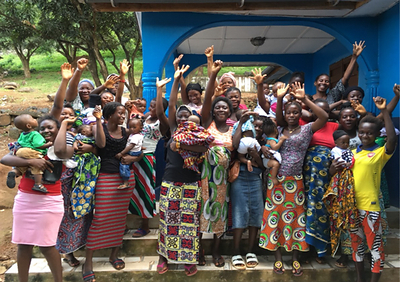
Sierra Leone has a lifetime maternal mortality risk of 1 in 52, and adolescent girls bear a disproportionate share of those deaths, compounded by poverty, stigma, and social exclusion that traditional facility-based care rarely reaches in time. 2YoungLives, developed through a 20-year partnership between King’s College London and Lifeline Nehemiah Projects, a grassroots Sierra Leonean organisation, pairs pregnant girls under 18 with trained local mentors who provide health system navigation, psychosocial support, and economic empowerment. A cluster-randomised trial published in The Lancet in 2025, involving 673 adolescent girls, found a 48% reduction in maternal and perinatal mortality and a 32% increase in facility-based births, with over 80% of participants returning to education or starting small businesses. Led by Senior Research Fellow Cristina Fernandez Turienzo at King’s College London, the project is now transitioning to national scale-up in Sierra Leone and testing its model in Kenya.
‘We are truly honoured and humbled to receive this award.” said Dr. Cristina Fernandez Turienzo.
“This recognition celebrates the power of locally developed community-driven solutions to transform lives. The 2Younglives mentoring for pregnant girls and their babies not only saved lives, but helped these girls thrive beyond pregnancy, by supporting them to build sustainable income, return to education or begin vocational training. There are many stories of impact among girls themselves, sisterhood of mentors and changes in community mindset. Many aspects of 2YoungLives could help underserved communities in many countries around the world’
The ECORRA Trial: Equitable Cancer Outcomes across Rural and Remote Australia
Anna Ugalde, Skye Marshall, Anna Chapman, Serene (Sze Lin) Yoong, Camille Short, Nicolas Hart, Kate Gunn, Rebecca Bergin, Charlene Wright, Hannah Jongebloed

People with cancer in rural Australia are up to 72% less likely to survive than those living in cities, and face waits of up to 53 days longer for diagnosis and treatment to begin. Geographic isolation, in a high-income country, can create health inequities as serious as those in lower-resource settings, and rural Australians are now named as a priority population in Australia’s national cancer policy. The Equitable Cancer Outcomes across Rural and Remote Australia (ECORRA) Trial, led by Professor Anna Ugalde at Deakin University and funded by Australia’s Medical Research Future Fund (2024–2029), is co-designing an implementation package with rural health services, clinicians, and a 17-member consumer advisory committee, to help those services align with national cancer guidelines. The trial brings together over 80 collaborators nationally and will test the implementation package across 14 rural and remote health service sites from 2027.
“We are truly honoured to be recipients of the 2026 Elsevier Foundation-Lancet Evidence to Impact Award.” said Professor Anna Ugalde.
“This project represents a national partnership of collaborators from across the Australian cancer control sector, including academia, health services leadership and management, people with a lived experience, policymakers, and advocacy groups who are dedicated to reducing the inequities experienced by people living in rural and remote areas of Australia. We are delighted to be recognised for our methods, in particular, our application of implementation science. We hope this project advances research methods in our field while also driving real-world impact.”
“These three winning teams have demonstrated everything we wished to champion when it came to turning evidence into impact: a demonstrated need from the community, meaningful co-design within those communities, clear implementation strategies and outcomes, and long-term partnerships for sustainability. We wholeheartedly congratulate these teams and encourage others to explore the model projects they have conducted in the pursuit of health equity.”
Zoe Mullan, Editor in Chief, The Lancet Global Health
“We created these awards to shine a light on the people doing the hard work of turning evidence into better health outcomes. Our winning teams show that lasting change comes from building strong community-driven partnerships and making implementation part of the research from the start. We’re also deeply grateful to our outstanding international jury and our colleagues at The Lancet, whose expertise and commitment helped shape and will continue evolve our awards. We’re thrilled to recognize these impressive teams and the impact they’re making.”
Ylann Schemm, Executive Director, Elsevier Foundation
The scientific jury comprised leading implementation scientists from Brown University, Advocate Aurora Research Institute, Southern Medical University, Johns Hopkins Bloomberg School of Public Health, and the University of Aberdeen.
Learn more about The Lancet–Elsevier Foundation Evidence to Impact Awards at elsevierfoundation.org/awards/lancet-ef-evidence-to-impact-awards/
Notes for editors
More information about the winning and shortlisted projects and the teams behind them is available on request.
About the Elsevier Foundation
The Elsevier Foundation contributes a million USD a year to non-profit organizations through partnerships which incubate new approaches, highlight inequities, and catalyse change toward the UN Sustainable Development Goals. Funded by Elsevier, a global information analytics company specializing in science and health, the Elsevier Foundation is part of Elsevier’s wider corporate responsibility program. By leveraging Elsevier’s networks and unique insights in content, data and analytics, the Elsevier Foundation is able to expand its impact in gender, health, climate action and reduced inequalities. Since 2005, the Elsevier Foundation has contributed over $19 million in grants to over 100 partners in 70 countries around the world. In addition, the Elsevier Foundation offers a special fund to support disaster relief, matching employees’ donations, and volunteering to enable employees to work closely with Foundation partners and support their communities. www.elsevierfoundation.org/
About Elsevier
Elsevier is a global leader in advanced information and decision support. For over a century, we have been helping advance science and healthcare to advance human progress. We support academic and corporate research communities, doctors, nurses, future healthcare professionals, and educators across 170 countries in their vital work. We help impact makers achieve better outcomes with research and clinical-grade solutions built on the world’s leading evidence-based scientific and medical content, precision AI, and expert human assessment. We champion inclusion and sustainability, working with the communities that we serve. The Elsevier Foundation supports research and health partnerships around the world.
Elsevier is part of RELX, a global provider of information-based analytics and decision tools for professional and business customers. For more information, visit www.elsevier.com and follow us on social media @elsevierconnect.
 View original content to download multimedia:https://www.prnewswire.com/news-releases/elsevier-foundation-and-the-lancet-announce-winners-of-inaugural-evidence-to-impact-awards-302823742.html
SOURCE Elsevier Limited
