
Rooftop solar could cut electricity costs by up to 80% for warehouse-type buildings, according to research commissioned by the UK Warehousing Association (UKWA).
RAINHAM, England, July 21, 2026 /PRNewswire/ — Excel Waste Management, an Essex-based waste management and skip hire company, today released an analysis of how falling solar installation costs and improving project economics are reshaping energy investment decisions across the UK’s waste management sector. Drawing on public data from the Department for Energy Security and Net Zero (DESNZ), industry research from the UK Warehousing Association (UKWA) and LCP Delta, and sustainability disclosures from major waste operators, the analysis finds that commercial rooftop solar has shifted from a long-term environmental initiative to an increasingly cost-effective infrastructure investment.
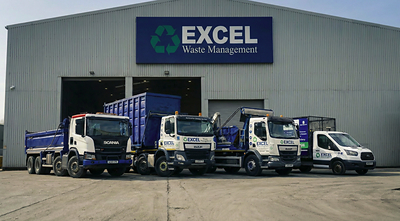
The economics behind commercial solar have improved substantially over the past decade. Government data show that rooftop installation costs have fallen by roughly 28%, while the cost of generating solar electricity at scale has almost halved since 2016. At the same time, industrial facilities such as recycling centers, transfer stations, and waste depots possess many of the characteristics that make rooftop solar particularly effective: large roof areas, significant daytime electricity demand, and long-term ownership of operational sites.
For Waste Management / SMB businesses, energy consumption is a core operating cost rather than a peripheral overhead. Processing equipment, balers, conveyors, compactors, weighbridges, and vehicle maintenance facilities all require reliable electricity throughout the working day. As installation costs decline and electricity generation becomes cheaper, the financial case for producing energy on-site has strengthened. The analysis concludes that solar is increasingly being evaluated as an operational investment supported by measurable cost savings rather than solely as a sustainability initiative.
Commercial rooftop solar installation costs have fallen by around 28% in a decade
The most significant change in commercial solar economics has been the decline in installation costs. According to the Department for Energy Security and Net Zero’s Solar Roadmap (June 2025), the cost of a typical 3.5kW rooftop solar installation fell from approximately £9,000 in 2013/14 (2024 prices) to around £6,500 in 2024/25, a reduction of roughly 28%.
Lower capital costs improve project economics by shortening payback periods and strengthening returns on investment. Waste management facilities are particularly well suited to benefit because their large industrial buildings and substantial daytime electricity demand allow much of the electricity generated by rooftop solar to be consumed on-site, making renewable energy an increasingly cost-effective operational investment.
The cost of generating solar electricity has roughly halved since 2016
Falling installation costs tell only part of the story. According to DESNZ, the Levelised Cost of Electricity (LCOE) June 2025 for ground-mounted solar fell from approximately £92/MWh in 2016 to £47/MWh in 2025 (2020 prices), meaning the cost of generating solar electricity has almost halved in less than a decade.
Combined with lower installation costs, cheaper electricity generation has significantly improved the economics of commercial solar. For industrial businesses, including waste management companies, producing more electricity on-site reduces dependence on grid power and strengthens the long-term financial case for investment.
Rooftop solar could reduce electricity costs by up to 80% for warehouse-type buildings
The strongest commercial case for rooftop solar comes from how industrial buildings use electricity. Research commissioned by the UK Warehousing Association (UKWA) and conducted by LCP Delta in August 2022 found that rooftop solar could reduce annual electricity costs by 40% to 80% for warehouse and industrial buildings. The study also estimated potential savings of £3 billion a year across the UK warehousing sector.
While the research focused on warehouses, its findings are highly relevant to waste management facilities. Recycling centers, transfer stations, and skip depots typically occupy large industrial buildings with extensive roof space and significant daytime electricity demand. Equipment such as conveyors, balers, and sorting machinery operates mainly during daylight hours, allowing much of the electricity generated by rooftop solar to be used immediately on-site.
This close alignment between electricity generation and consumption improves project economics by reducing reliance on grid electricity. The analysis concludes that waste depots share the same characteristics identified by UKWA as making warehouse buildings particularly well suited to commercial rooftop solar investment.
The UK’s largest industrial roofs could support around 15GW of solar capacity
Commercial rooftop solar also represents a significant national energy opportunity. According to the UKWA/LCP Delta research in August 2022, the 20% largest warehouse buildings in the UK provide approximately 75 million square meters of roof space, enough to support an estimated 15GW of rooftop solar capacity.
The findings highlight the value of existing industrial buildings as renewable energy assets. Unlike ground-mounted solar farms, rooftop systems use infrastructure already in place, allowing businesses to generate electricity without requiring additional land or disrupting operations.
This is particularly relevant for waste management companies, whose recycling centers and transfer stations often occupy large warehouse-style buildings with extensive roof space. The analysis concludes that industrial rooftops remain one of the UK’s most underutilized renewable energy resources, offering substantial potential to expand on-site electricity generation while reducing dependence on grid power.
Major Waste Operators are Investing Heavily in Solar Generation
The improving economics of commercial solar are reflected in investment decisions across the UK waste management sector. Biffa’s Resourceful, Responsible sustainability strategy, released in March 2020, targets the development of at least 100MW of renewable energy capacity by 2030 through solar farms on closed and restored landfill sites.
While landfill solar differs from rooftop installations at operational depots, both approaches use existing assets to generate renewable electricity and reduce reliance on grid power. Biffa’s investment demonstrates that solar is increasingly being treated as long-term operational infrastructure rather than solely an environmental initiative.
The analysis concludes that commitments of this scale reflect growing confidence across the waste sector that renewable energy has become a commercially viable investment supported by measurable operational and financial benefits.
Existing Landfill Solar Projects Already Generate More Than 70MW
Investment in renewable energy is already delivering results. Veolia UK official press release “Life left in the landfill,” 29 August 2017, reports their development of solar installations at its restored landfill sites in Netley, Ling Hall, and Ockendon, which together can generate more than 70MW of renewable electricity, enough to power approximately 185,000 homes.
While these projects differ from rooftop solar at operational depots, both demonstrate how existing waste management assets can be used to generate renewable energy. The analysis finds that investment across landfill sites and recycling facilities reflects the sector’s growing commitment to integrating renewable electricity into long-term operations.
Solar-Plus-Battery Systems are Changing Waste Depot Electricity Use
Commercial solar is increasingly being combined with battery storage to maximize on-site electricity use. In January 2026, Cambridge City Council announced a renewable energy system comprising a 1MW solar array, 2MWh battery storage system, and charging infrastructure at a shared waste depot. The project is expected to supply approximately 59% of the depot’s energy needs while supporting a growing fleet of electric refuse collection vehicles.
Battery storage allows surplus daytime electricity to be used later, increasing self-consumption and reducing reliance on grid electricity. For facilities with predictable energy demand, this improves both operational resilience and the financial performance of rooftop solar systems.
The project reflects a broader shift as waste operators prepare for fleet electrification. The analysis concludes that integrated solar-and-storage systems are likely to become an increasingly common feature of modern waste depots, improving energy independence while reducing long-term operating costs.
What the Findings Mean for Excel Waste Management
The findings provide context for Excel Waste Management’s recent installation of rooftop solar panels at its recycling and transfer center in Rainham, Essex. The investment reflects wider developments across the UK waste sector, where falling installation costs and improving project economics have strengthened the business case for on-site renewable energy.
Excel Waste Management serves Greater London, East London and Essex from its recycling facility, where waste is weighed, processed and sorted into reusable material streams including soil, hardcore, wood, metal, glass and plastic. According to the company, approximately 98% of the waste it receives is recycled or reused.
The analysis concludes that waste depots are among the industrial facilities best positioned to benefit from rooftop solar because of their large roof areas and substantial daytime electricity demand, making renewable energy an increasingly practical operational investment.
Methodology
Excel Waste Management synthesized publicly available information from the UK Department for Energy Security and Net Zero (DESNZ), including Solar Roadmap: United Kingdom Powered by Solar (June 2025); industry research published by the UK Warehousing Association (UKWA) and LCP Delta (August 2022); and official sustainability reports and announcements from Biffa plc, Veolia UK, and Cambridge City Council. No proprietary survey or customer research was conducted. All statistics are drawn from named third-party sources and reflect information available as of July 2026. Company information relating to Excel Waste Management is based on publicly available information supplied by the company.
Frequently Asked Questions
Has installing solar actually become cheaper for businesses such as waste depots?
Commercial rooftop solar has become significantly more affordable over the past decade. According to the Department for Energy Security and Net Zero, installation costs for a typical rooftop system have fallen by approximately 28%. In contrast, the cost of generating solar electricity has almost halved since 2016. Together, these changes have improved project economics and shortened expected payback periods for many industrial businesses.
How much could a waste depot save on electricity?
Waste depots could reduce annual electricity costs by 40% to 80%, according to research commissioned by the UK Warehousing Association and undertaken by LCP Delta. Actual savings depend on factors including electricity demand, roof area, system size, and the proportion of generated electricity consumed on-site.
What about the cost of the electricity itself, not just the solar panels?
Solar electricity has become substantially less expensive to generate. Government analysis shows the Levelised Cost of Electricity (LCOE) for ground-mounted solar declined from approximately £92/MWh in 2016 to around £47/MWh in 2025, strengthening the long-term financial case for commercial renewable energy projects.
About Excel Waste Management
Excel Waste Management is a Rainham, Essex-based skip hire and waste management company founded in 2013. The company serves Greater London, East London, and Essex from its recycling and transfer center, where inbound waste is weighed, processed, and sorted into reusable and recyclable material streams. Excel Waste Management states that approximately 98% of the waste it receives is recycled or reused, and has recently installed rooftop solar panels as part of its ongoing investment in more sustainable waste management operations. More information is available at https://excelwastemanagement.co.uk.
Media Contact
Contact: Louisa Groves
Email: [email protected].uk
Location: Essex, UK
 View original content to download multimedia:https://www.prnewswire.co.uk/news-releases/falling-costs-and-up-to-80-potential-electricity-savings-make-solar-a-proven-bet-for-waste-depots-excel-waste-management-analysis-finds-302831170.html
